Overview
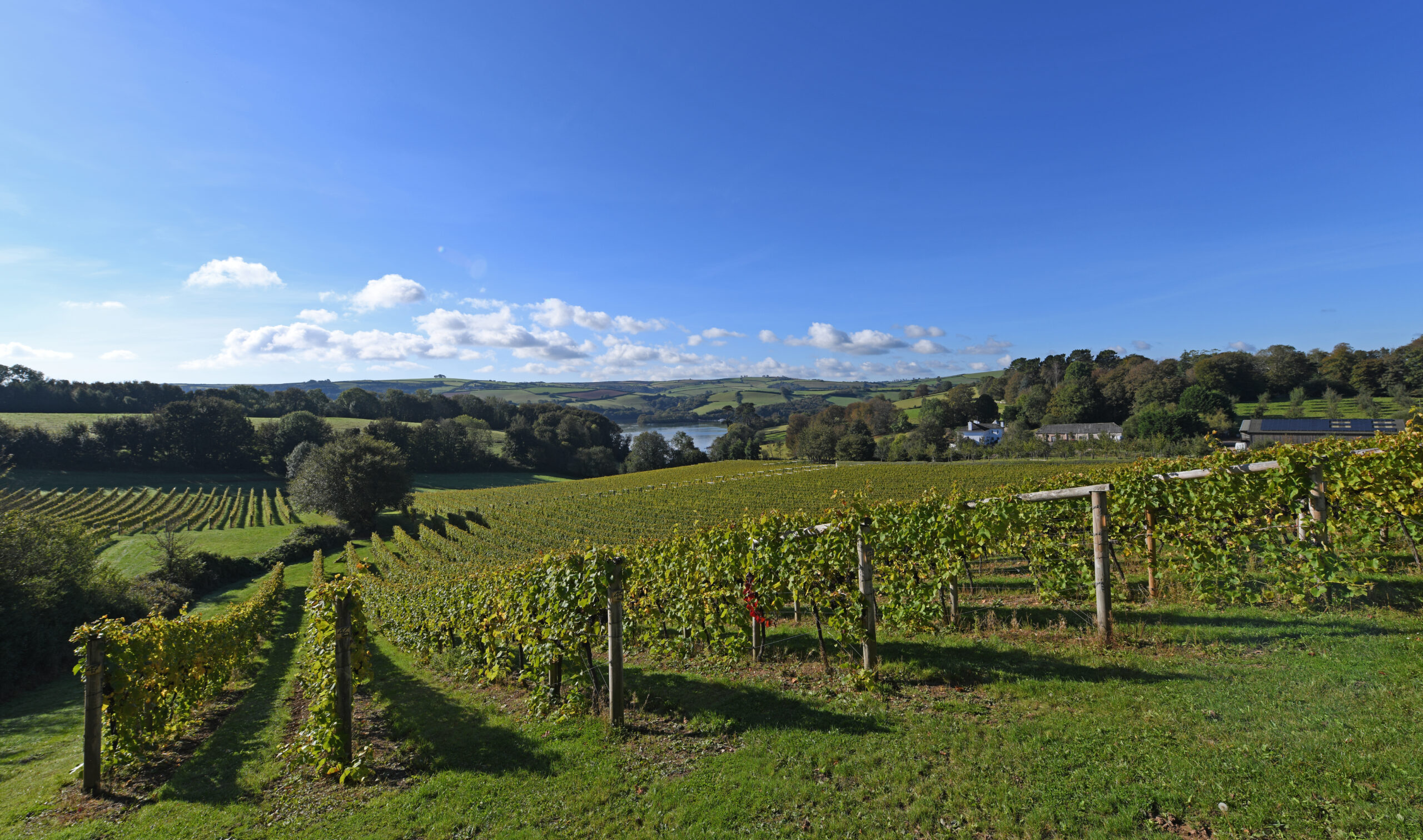
Heat Stress? Forest fires? 14.5% ABV? You may be forgiven for wondering whether you are reading a vintage report from another country. 2022 set, in many ways, a new precedent for English and Welsh wine making. The headline news is a period of heat and dryness unparalleled, in many aspects, by any in recorded British history. From May, warm conditions were frequent, June was hotter still and, by July, England and Wales were venturing into increasingly uncharted territory. On July 19th, Coningsby recorded a temperature of 40.3 degrees, the highest temperature ever recorded in Britain. Fires broke out in London. At Danbury Ridge in Essex, Duncan McNeil described to JancisRobinson.com how the beating heat left Danbury’s clay riven with fissures, while head wine maker Liam Idzikowski started to worry about forest fires.
For Britain’s vineyards and wineries, the contrast from 2021 was stark. We noted in our 2021 report that the vintage was one of ‘exceptional difficulty’. A cool, damp summer and repeated scourging by frost made for a difficult and demanding year for many grape growers and wine makers, even if many of the eventual wines were of impressively high quality. In 2022 however, the long, hot summer made for almost unparalleled conditions for English grape growing. Martin’s Lane, in Essex, reports that ‘2022 fulfils all we would ever ask in this country’ in order to ‘grow grapes comparable with any international standard.’ For Knightor in Cornwall, it was the ‘perfect year for grapes’.
The year was not without its challenges. Yields were down for several vineyards, with many reporting that the fierce heat producing smaller berry and bunch sizes. Disease pressure, while much reduced from 2021, was not wholly absent, with at least one vineyard reporting troubles with rot towards the end of August. However, it is clear overall that 2022 has been an outstanding one for English wine, although one that also raises many questions about the future.
Growing Season
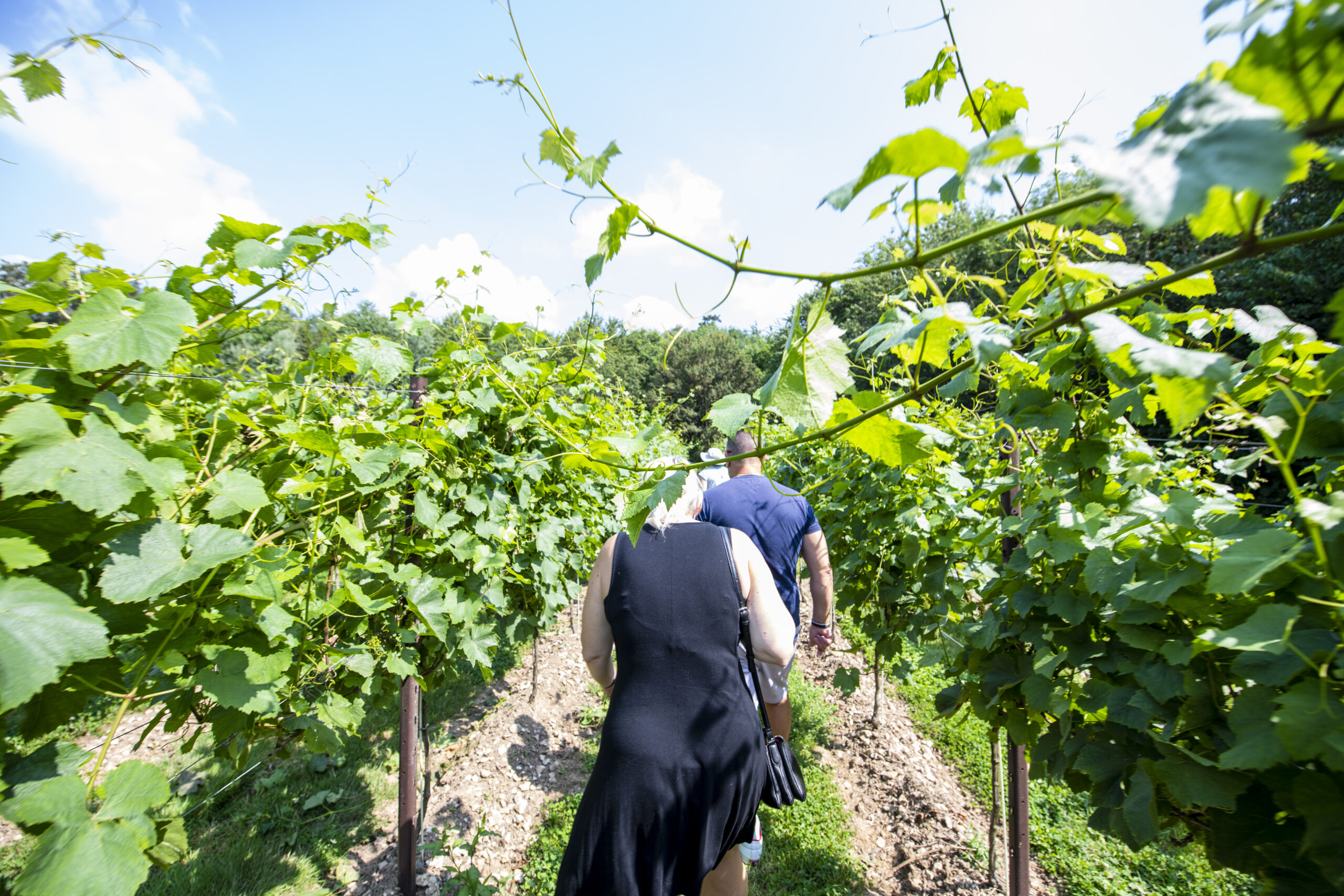
The winter of 2021 was a little milder than average, though punctuated with cold snaps and storms throughout January and February. By March however temperatures were on the up, and 2022 presented the fifth warmest spring on record. Early flowering was reported by several vineyards, including Knightor, who reported flowering two weeks earlier than typical. For many grape growers, this mild weather raised fears of frost, so dangerous to vines which have progressed to budburst. In the end however frost, which had so blighted many producers over the last two years, was mercifully low, with most vineyards reporting little or no difficulties.
The heat started in earnest around May and continued almost unabated until late August. Such was the heat that some growers had to cope with a problem rarely encountered in Britain: water stress. In Kent, Simpsons reported that, over 2022 as a whole, their vineyards experienced just short of half of the total rainfall of the previous year. However, their vines escaped any serious water stress, which Simpsons attribute to their ‘chalk-rich terroir, which held on to the rare drops of much-needed moisture and slowly released it to the vine roots over the summer months’. Gusbourne similarly reported heat stress in some of their vineyards, with chief vineyard manager Jon Pollard noting that Gusbourne’s soil profile nevertheless helped the vines find water. Terroir was important in Essex as well. Martin’s Lane noted that their ‘deep and moisture retentive clays’ limited the need for irrigation, while Danbury Ridge attributed their vines’ resistance to the fact that the estuarine clay both retained water and cracked under heat, allowing vines to force their roots deeper and draw up more moisture.
For the vineyards that did have more difficulty, it was often to be found in younger vines. In Kent, Matt Ashford, vineyard manager at Wayfarer Wines, reports heat stress occurring in younger vines at Wayfarer’s Highfield Estate. However, he notes that, at Wayfarer’s Pilgrims Way site, the ‘the well-established vines there had access to water deep beneath the surface’. Similar patterns were seen at Martin’s Lane, Albourne and Danbury Ridge, who all reported some stresses with their younger vines, with Danbury and Martin’s Lane conducting some irrigation by hand. For older vines however, very few problems were reported.
Disease remained very limited or wholly absent for most vineyards. However, towards the end of August, humid conditions and some heavy rain bursts made for a sting in the tail of a glorious season. Powdery mildew troubled some vineyards, including Knightor, while one vineyard reported significant damage to a crop Madeleine Angevine and Schonburger.
Harvest

Against this backdrop, some vineyards reported relatively early harvesting. Balfour Hush Heath began their harvest a full two to three weeks earlier than usual, an unusual situation that required ‘well-written press plans, some solid mathematics, and all three of [Balfour’s] four-tonne presses on the go at all times’. Albourne, with an eye to the risk of botrytis, also reported commencing their harvest ten days earlier than usual. Chapel Down commenced their harvest at the end of August, with winemaker Josh Donaghay-Spire suggesting that the earlier harvest will result in a ‘riper style of wine akin to that found in the successful 2018 or 2020 vintages’. Woodchester Valley meanwhile reported their shortest ever harvest, running for just four weeks, a stark contrast with their usual six to eight week harvest.
Most began harvesting in September- Knightor began harvesting their Pinot Noir Précoce in the first week of September, while Denbies began on September 13th. However, there were also accounts of delayed harvests. In Kent, Simpsons delayed harvest until October 2nd, hoping the extra time would swell the unusually small berries. Most had finished by early-mid October, with Martin’s Lane concluding their harvest of Pinot Noir on October 21st.
Quality
By the end of the summer, it was clear that 2022 had the potential to be a great vintage. While many still wines from 2022 will not be released until later this year, and the sparkling wines further off still, initial reports from vineyards suggest an almost extraordinary vintage for grape quality. Particularly singled out by many vineyards was the sheer ripeness achieved across grape varieties. In Essex, Martin’s Lane reported ripeness unparalleled by any previous vintage, with some parcels of Pinot Noir clocking in at a formidable 104/105 Oechsele (14.7% ABV), with their Chardonnay and Pinot Gris not far behind. In Cornwall, Knightor reported their ‘sparkling’ grapes achieving still sugar levels.
Denbies describes an ‘excellent’ quality of fruit, ‘abundant in almost every block of the vineyard’, while Heppington said the quality achieved was ‘exceptional’, with both ‘acidity and sugars where we wanted them’. Similar sentiments were echoed at Woodchester Valley, who report ‘sweet’ and ‘intense’ fruit, with excellent sugar levels and phenolic maturity across all varieties’. Chapel Down meanwhile reports that the 2022 harvest ‘has not disappointed on yield or quality’.
Yields
One feature noted by several vineyards was a lower yield than expected. Martin’s Lane reported their crop (1.75t/ acre) was down by 30% from initial predictions, which they attribute to ‘extended periods of hot dry weather which left berry and bunch sizes much less than in more normal growing seasons’. Similarly, Danbury Ridge reported a lower yield, with ‘small berries and light clusters’.
Moving to slightly cooler areas, higher yields became more common. Knightor noted that their yield was up on the previous two years, while Albourne reported their second biggest harvest. Heppington reported a healthy harvest of 75 tonnes, despite green harvesting earlier in the year. For bigger producers, several records were broken. Chapel Down, England’s largest wine producer, harvested a record 2,000 tonnes, 40% up from the previous year. Nyetimber covered a record 325 hectares during their harvest- an estimated 1 million bottles worth. Simpsons also had a record harvest, covering 137,349 metres of vine to harvest 277.5 tonnes of fruit. They anticipate producing 250,000 bottles, reaching their original target set when the business was established in 2012.
For the most part, no problems with labour or materials shortages were reported. However, rising costs did bring challenges sourcing sufficient labour for some, with one vineyard reporting using a machine harvester for the first time, in part to reduce the labour required.
Conclusions
For England and Wales, 2022 was clearly a spectacular year for grapes, with unparalleled warmth and sunlight, combined with a clement spring and mostly dry harvest conditions. And indeed, many of the 2022 wines we have tried have been of very high quality. After the challenges of 2021, 2022 was undoubtedly a welcome year, where still and sparkling growers and wine makers alike reported great results.
But 2022 is also a year that raises many questions. While a full discussion of the relationship between Britain’s wine industry and climate change is a much bigger subject than can be dealt with here, it would be remiss not to consider the extraordinary summer conditions of 2022 in their broader context of rising global temperatures, and the meteorological and environmental challenges this rise will bring. While it is still too early to say what conditions summer 2023 will bring, it seems likely that more extreme and volatile weather conditions will become increasingly the norm for English and Welsh wine making. Issues such as irrigation and alcohol levels will likely gain increasing significance, as well as questions over the role of English and Welsh wine is the broader market, as wine regions across the globe reckon with increasing temperatures. In the meantime, however, buyers can be confident that 2022 has given English and Welsh winemakers near everything they need to produce some truly great wines.